general
Medical Assistant vs. Phlebotomy Technician: Which Career Is Right for You?
Both are fast, affordable ways into healthcare — but they're not the same job. This guide compares Medical Assistant and Phlebotomy Technician training length, cost, day-to-day duties, and long-term career growth, so you can figure out which one actually fits what you want to do.
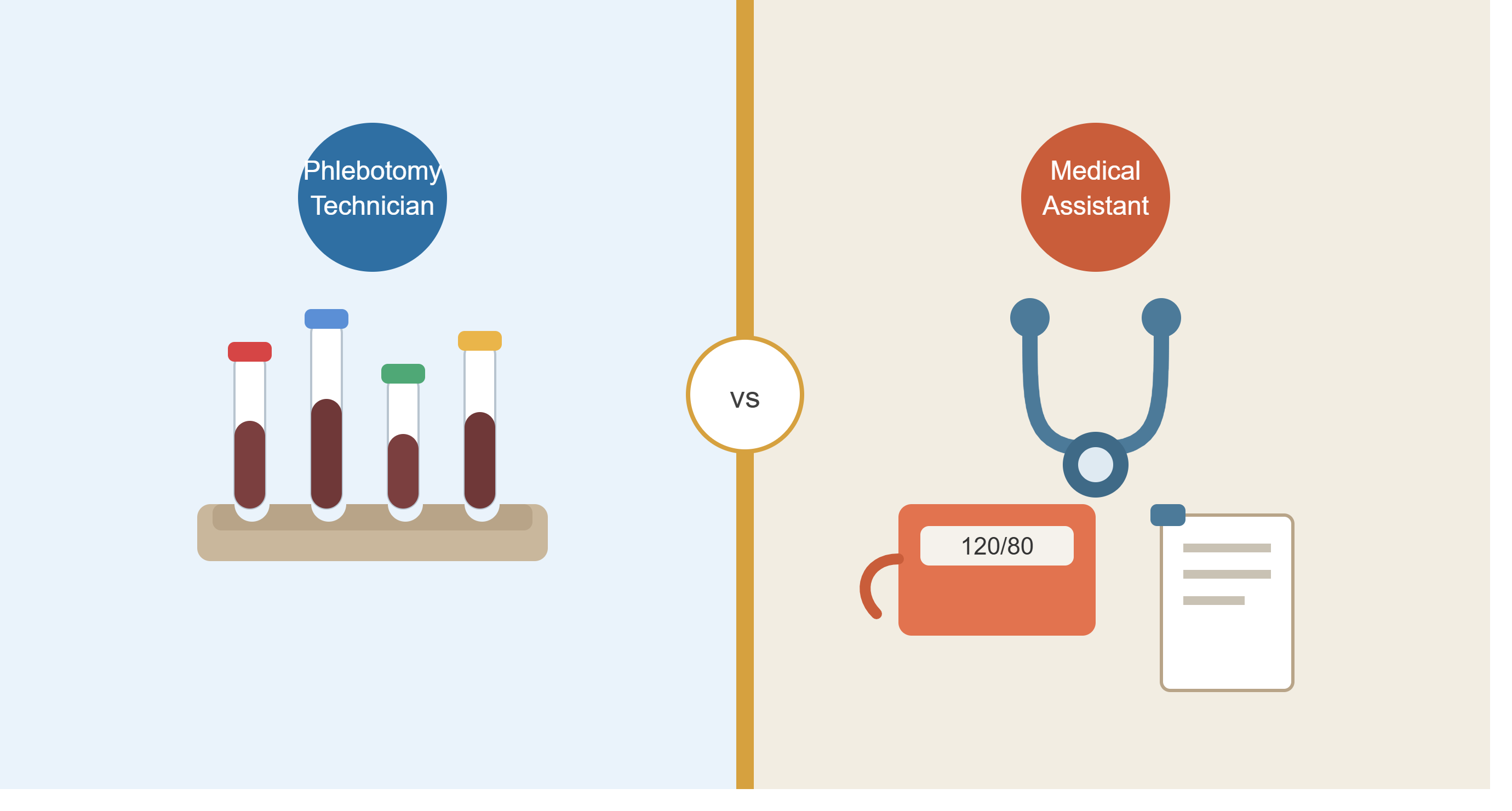
Medical Assistant vs. Phlebotomy Technician: Which Career Is Right for You?
If you're looking to break into healthcare quickly, Medical Assistant and Phlebotomy Technician are two of the most popular entry points — and for good reason. Both offer short training timelines, hands-on work, and real career stability. But they're not the same job, and choosing the right one depends on what kind of day-to-day work you actually want.
Here's how they compare.
What Does a Phlebotomy Technician Do?
Phlebotomy technicians specialize in one core skill: drawing blood. That includes:
- Venipuncture and capillary blood draws
- Verifying patient identity and labeling samples
- Preparing draw stations and following safety/infection-control protocols
- Working with patients who may be anxious about needles
It's a focused, hands-on role. You'll work in hospitals, labs, blood donation centers, and clinics — anywhere blood needs to be drawn and processed correctly.
What Does a Medical Assistant Do?
Medical Assistants have a broader scope. The role blends clinical and administrative tasks, including:
- Taking vitals (blood pressure, temperature, pulse)
- Preparing patients for exams and assisting physicians during visits
- Administering injections and, depending on training, basic phlebotomy
- EKGs and other basic diagnostic procedures
- Scheduling, patient intake, and medical records support
Medical Assistants typically work in physician's offices, outpatient clinics, and specialty practices, functioning as a right hand to doctors and nurses.
Side-by-Side Comparison
| Phlebotomy Technician | Medical Assistant | |
|---|---|---|
| Focus | Blood draws only | Clinical + administrative, broad scope |
| Training length | ~5 weeks | ~16 weeks |
| Cost | Lower | Higher |
| Day-to-day variety | Repetitive, specialized | Varied — clinical and front-office tasks |
| Certification | NHA Certified Phlebotomy Technician (CPT) | NHA Certified Clinical Medical Assistant (CCMA) or similar |
| Typical settings | Labs, hospitals, blood centers | Physician's offices, outpatient clinics |
| Good for | Fast entry, testing the waters in healthcare | Broader clinical experience, longer-term growth |
Which One Trains Faster?
Phlebotomy wins here by a wide margin. Most programs run around 5 weeks, compared to roughly 16 weeks for Medical Assistant training. If your priority is getting into a paycheck as fast as possible, phlebotomy is the quicker path.
Which One Costs Less?
Phlebotomy training is also the more affordable option upfront, generally running well under half the cost of a Medical Assistant program. That said, Medical Assistant training covers significantly more ground — more skills, more certification value, and typically a wider range of job opportunities once you're certified.
Which One Pays More?
Medical Assistants generally have a higher earning ceiling than phlebotomy technicians, largely because the role covers more responsibility and a broader skill set. Phlebotomy technicians can still earn solid entry-level wages, especially in high-demand lab or hospital settings.
Which One Has Better Career Growth?
This is where Medical Assistant training tends to pull ahead. Because the role touches so many parts of clinical care, it's a common stepping stone toward further healthcare education — LPN, RN, or other allied health paths. Phlebotomy is also a valid stepping stone, but the day-to-day skill set is narrower, so the "next step" often means adding more training on top rather than expanding within the same role.
So, Which Should You Choose?
Ask yourself:
- Do you want to start working as fast as possible, with the lowest upfront cost? → Phlebotomy Technician
- Do you want broader clinical experience and more variety in your day-to-day work, and don't mind a longer training period? → Medical Assistant
- Are you not sure yet, and want to "test" healthcare as a field before committing more time and money? → Phlebotomy Technician is a lower-risk starting point — some students complete phlebotomy first, then go on to Medical Assistant training once they know it's the right field.
There's no wrong answer here — it depends on your timeline, budget, and how much variety you want in your daily work.
Train for Either Path in Duluth, GA
Bliss Medical Academy offers both programs with hands-on training and a schedule built for working adults:
Phlebotomy Technician
- 110 hours
- $1,625
- Evening Zoom lectures (Mon/Wed/Fri) + weekend in-person labs
- Prepares you for the NHA Certified Phlebotomy Technician (CPT) exam
Medical Assistant
- 486 hours
- $4,400
- Hybrid format — evening lectures + hands-on weekend labs
Learn more and enroll at Bliss Medical Academy →
This article is for general informational purposes and doesn't replace guidance from a specific training program or licensing body. Program details are current as of publication — confirm current pricing, schedule, and start dates directly with Bliss Medical Academy.
Written by
Rajesh Bhatia
Keep reading
More from the blog

Is Bliss Medical Academy GNPEC Approved?
Wondering if a training program is legitimate? GNPEC authorization is the state's stamp of approval for career schools in Georgia. This post explains what GNPEC actually checks, confirms Bliss Medical Academy's current authorization, and shows why this matters more than price when comparing programs.

What to Expect in Your First Week of Phlebotomy Training?
Starting phlebotomy training soon? Here's a realistic walkthrough of your first week — from safety and terminology on day one, to equipment and procedure, to your first hands-on lab session. Includes what tends to surprise new students and how to prepare before you walk in.
CCMA vs. CMA Certification: What's the Difference?
CCMA and CMA are the two most common Medical Assistant certifications, but they come from different organizations with different eligibility rules. This guide breaks down what each one requires, what the exams cover, and — most importantly — which one your training program actually qualifies you for.